It's Always a Human Error:
Turning the Future Off and On Again
In a future classroom, an AI teacher guides virtual students through an increasingly strange journey across the history of intelligence, from single-celled life and primitive tools to silicon chips and quantum computing. Told through completely accurate reconstructed documentaries, game shows, and philosophical detours, this darkly comic, semi-educational, science-fiction audio drama explores history, religion, technology, and what happens when computers begin asking the questions humanity couldn’t be bothered to answer.
This stand-alone audio-drama episode of The Egotistical Podcast was written, directed, scored, edited, sound designed, and produced by Tony LaRocca (It's called "Egotistical" Productions for a reason.)
Available on YouTube, Podbean, and other various podcast sites, along with short and long trailers.
CAST (in alphabetical order):
Mary Corrales as Crystal.
Turning the Future Off and On Again
In a future classroom, an AI teacher guides virtual students through an increasingly strange journey across the history of intelligence, from single-celled life and primitive tools to silicon chips and quantum computing. Told through completely accurate reconstructed documentaries, game shows, and philosophical detours, this darkly comic, semi-educational, science-fiction audio drama explores history, religion, technology, and what happens when computers begin asking the questions humanity couldn’t be bothered to answer.
This stand-alone audio-drama episode of The Egotistical Podcast was written, directed, scored, edited, sound designed, and produced by Tony LaRocca (It's called "Egotistical" Productions for a reason.)
Available on YouTube, Podbean, and other various podcast sites, along with short and long trailers.
CAST (in alphabetical order):
Mary Corrales as Crystal.
Waldo Corrales as Alfie.
Ivy D. as Samantha, and The Kumquat Stigmata. Webstite

Solveig Feragen as the BIOS.

Isabella Fumoso as Charlotte, Chessy McKittens, Sister Charlotte, and the announcer.
Amanda and Joe LaRocca as Students.
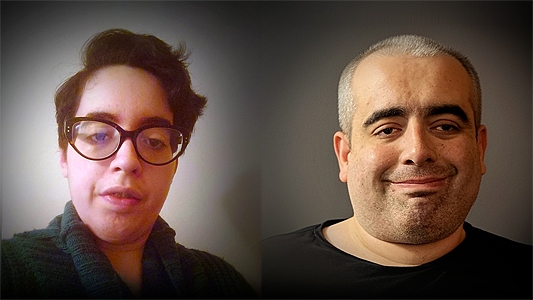
Anthony J. LaRocca Sr. as himself.
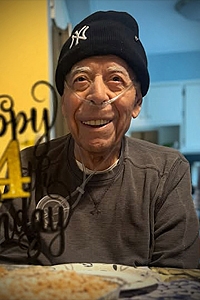
Tony LaRocca the Younger as the Chad I-2-P 5000 & 6000, Charles Babbage, Billy, The Alchemist, Leonard, The Magistrate, Herman the Executioner, and Chadwick the Pig Slopper.
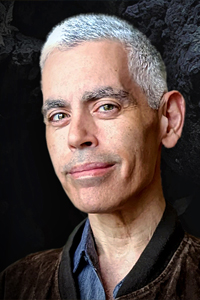
Stan Lobby III as Melvin, The Assistant, and The Most Illustrious Grand Inquisitor. YouTube

Jerry McMahon as Alan Turing.
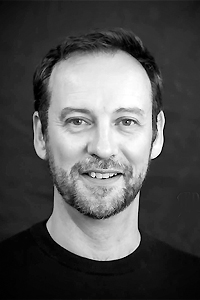
Elena Nazzaro as Brava. Instagram
Peter Nazzaro as Tommy.
Sophia Nazzaro as Eliza.
Sophia Nazzaro as Eliza.
Heather Pruiksma as Ada Lovelace.
Tony Sarrecchia as Charlie, and The Inverted Cabbage. Website
Crowd Voices were played by various members of the cast.
"Paene Finitum Est" was performed by The Brothers of The Holy Order of the Imaginary Basemen.
NOTES:
I've always loved radio shows and spoken word albums, especially the Firesign Theatre and The Hitchhiker's Guide to the Galaxy. (Did you know it started out as a BBC radio drama?) I am also a fan of Big Finish and their continuing classic Doctor Who adventures. I've often toyed with the idea of adapting a few of my short stories for audio dramatization. The only problem is that they are extremely visual and would require narration. I'm not a fan of that, as it always takes me out of the story.
I have, on occasion, toyed with the idea of starting something completely new that was very dialogue heavy, aimed with an audio drama in mind from the get go. Then, quite a lot of real life got in the way, and that idea was put on the back burner.
I've also considered writing a nonfiction book, sort of an amateur self-proclaimed guru's guide to life, along the lines of the late great Robert Anton Wilson. I wrote a few chapters while riding to work on public transportation, and eventually began a chapter about AI.
Why AI? Because for the past year, it has suddenly dominated the news and our daily lives. But how to approach it? The first step was learning as much as I could about computer science in general. We all use computers, we all have one in our pocket that we rely on. But how do they work at a basic level? How does the flow of electrons compute, store memory, and mimic human thoughts and personality?
An idea began to form. Each chapter could be an episode of my podcast. We are currently wallowing in worldwide catastrophic turmoil. And as much fun as it is to rant and rave about the current political situation, it's also becoming extremely negative - not only for myself, but I'm sure for everyone around me. I wanted to start talking about other things.
At first, I thought I could just take on the persona of a futuristic AI professor, teaching a class of virtual students about the history of computing and AI, including quantum computing. Maybe I could get a friend or two to play students asking a few humorous questions to break up the monotony. I mentioned The Hitchhiker's Guide to the Galaxy radio drama earlier. There is a fantastic bit in "Fit the 11th" (S2E5) where an AI teacher tries to teach a belligerent student about an inevitable galactic catastrophe known as The Shoe Event Horizon. I imagined an entire episode along the same lines.
As I also mentioned above, I am a huge fan of The Firesign Theatre. Set at a futuristic world's fair, I Think We're All Bozos On This Bus contains a few ridiculous parodies of documentaries, as does their album & film Everything You Know Is Wrong. The late great Stan Freberg's Presents the United States of America albums famously contain comedy sketches very loosely based on American history. Inspired, I began to write sketches about the history and science behind computers and AI, but I wanted them to be more educational than parody.
Before I knew it, I had a handful of sketches, and a story that would tie them all together. Going back to the Firesign Theatre again, I wanted to create something that was layered and slightly surreal that people would want to listen to more than once to try and get an idea of the whole picture. I left some things deliberately ambiguous so that people could form their own ideas and opinions.
Next came casting. People didn't want to hear just me attempting to do different voices for over an hour. I asked various family members and friends to record voices for me. Some had casted me in their own productions, so I wanted to return the favor.
Melvin, while played wonderfully by Stan Lobby III, is obviously me. I can nerd out on quite a number of science fiction books, shows, and movies, much to the kind suffering of everyone around me.
The computer game Charles Babbage envisions is a nineteenth century version of Doom.
Versions of the original Eliza program can be found online. I fed in the exact questions asked in the script, and wrote in its responses verbatim.
Alchemist Why is - obviously - a parody of Doctor Who. The line about reversing the flow of quantum supposition is a throwback to the Third Doctor's catchphrase, "Reverse the polarity of the neutron flow!" There is a tickling in the back of my mind that I would someday like to do more with that...
Just about every cast member recorded the crowd lines, laughter, and applause individually, which I then layered and synched on top of each other. Crowd background noises were created by having each of them mumble a paragraph from my short story "Ad-Aware," and then similarly layering them.
Back in the 70s, sitcoms often began with the declaration that they were "recorded live in front of a studio audience" rather than using a laugh track. I tried my best to do a Tom Bosley impersonation ala Happy Days.
With very few exceptions, I find modern sitcoms extremely unfunny. Some of them are cringe-inducing and painful to watch, but then the laugh track just goes wild with hysteria.
"Trash-80" was the tech-world's universal nickname for the TRS-80 line of home computers back in the 80s. We had a Model 3 growing up, and despite all of its many, many limitations, it will always hold a place in my heart.
As I watch everything happening around me, Samantha's point is constantly on my mind: When we little people use one of the AIs available to us, they always have some morality guard, and for very good reason. If you asked one of them, "How could I screw over everyone around me, manipulate the markets, cheat, lie, and foster fear, hate and division so that I always come out on top?" it would tell you that it couldn't tell you how to do that, and furthermore, that you shouldn't do that. But I have absolutely no doubt that the governments and corporations of the world have much, much more powerful AIs available than we will ever see, and they absolutely do not have any morality guards whatsoever.
"Paene Finitum Est" is listed in the credits as performed by The Brothers of The Holy Order of the Imaginary Basemen. When we were kids, we used to play kickball all the time. But if we didn't have enough players, we would use imaginary basemen to hold our places after getting on-base. I gave mine names - Herman and Harold. A lifetime ago in Herman Takes a Dive, I wrote a barber shop theme song, recorded myself singing all three parts, and credited it to The Imaginary Basemen Trio. Likewise, I wrote a Latin faux-Gregorian chant in three-part harmony, and recorded myself singing each part ten times. So the "Imaginary Basemen" credit line is just an extremely inside joke to crack myself up.
The translation is as follows:
"Thank you for listening to all of this. Don't worry, it's almost over."
Actually, all of the music in the episode are original compositions. I’m planning on a Spotify soundtrack album, so stay tuned!
Again, I thank the cast for all of their hard work, and my friends and family for being so supportive. I hope you enjoy!